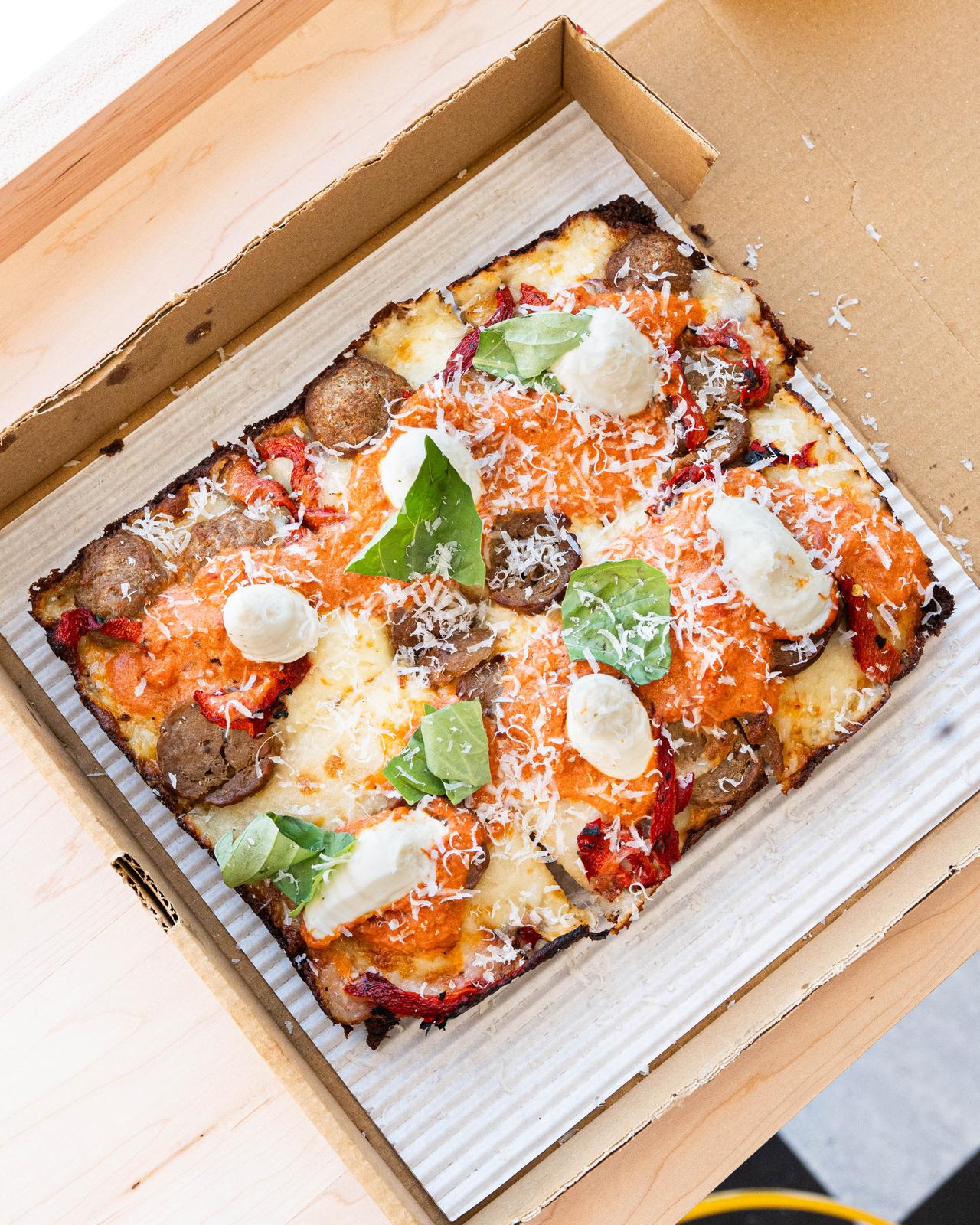
For the pizza nerds
I’ve probably spent more time thinking about pizza dough than is completely reasonable. When I started working on Fair & Square, one change seemed to lead to another and then another. I learned exactly how each ingredient in the dough interacted with each other, and how you could adjust flavor or rise or crispiness in so many different ways. I tried different flours, changed the fermentation, played around with hydration, and made a lot of pizza along the way. What we make now is the culmination of where all of that experimenting led.
Our dough
Where I ended up was with a dough built around a few things I really believe make a difference. We use a sourdough starter that we feed every day, along with a blend of high-quality organic, unbleached, and unbromated flours. From there, we give the dough plenty of time to develop its flavor and texture through a long, slow fermentation.
Our sourdough starter is a big part of what makes the dough special. It brings a depth of flavor and a subtle tang that you just don’t get from a dough made with commercial yeast alone. We do, however, use a small amount of commercial yeast alongside our starter. Some people might argue that this defeats the purpose of sourdough, but we don’t see it that way. We love the flavor and texture that sourdough brings to the table, and the small addition of yeast helps us keep things consistent from day to day. When you’re making pizza for a lot of people, that consistency matters.
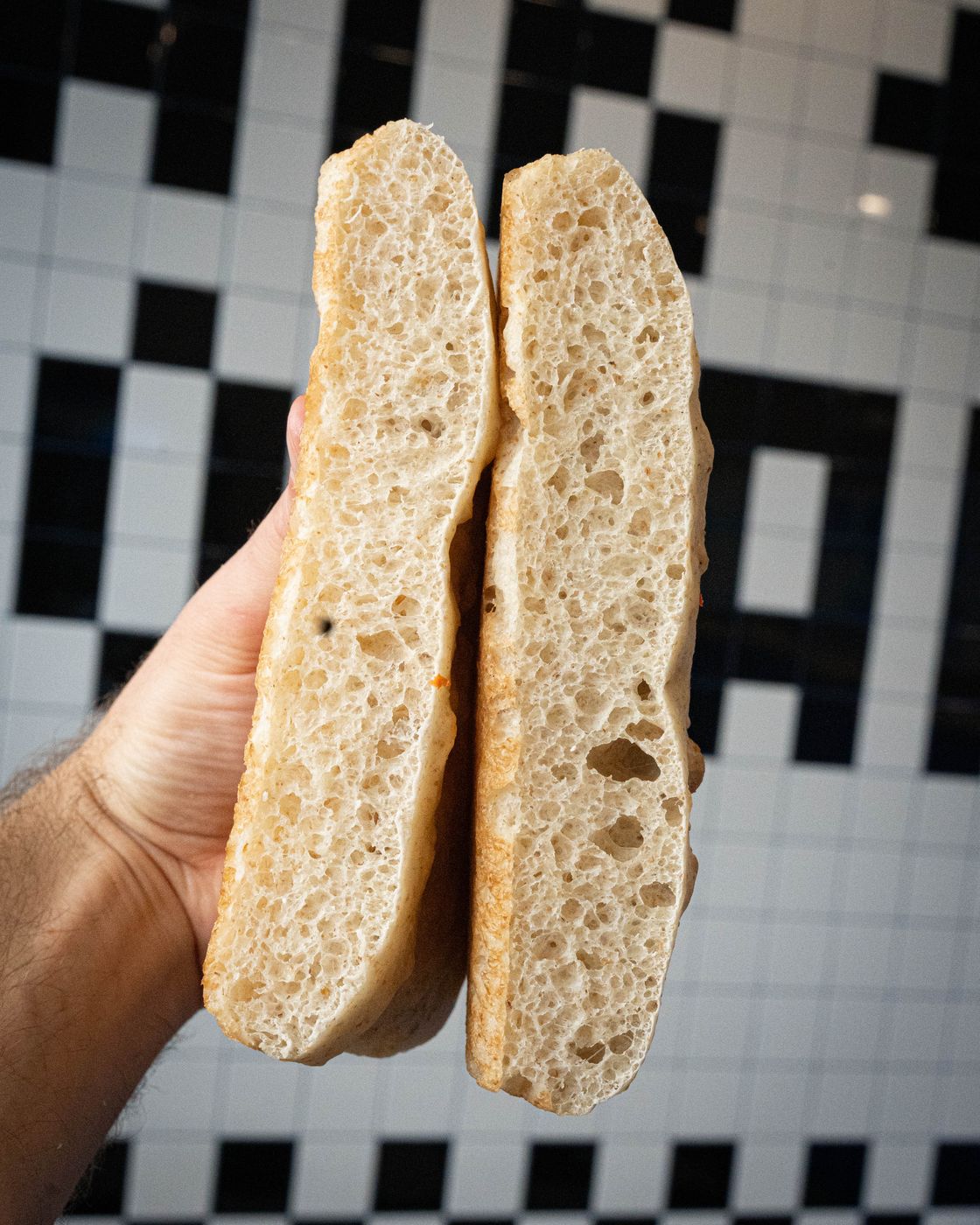
Once the dough is mixed, it goes into our walk-in cooler for a long, slow fermentation. Giving it this extra time allows the flavors to develop and the gluten to relax, helping us achieve the texture we’re after. The extended fermentation also begins breaking down some of the starches and proteins in the flour, which may make the dough easier to digest for some people. It’s one of the reasons our pizzas don’t leave you feeling so heavy and bloated after eating.
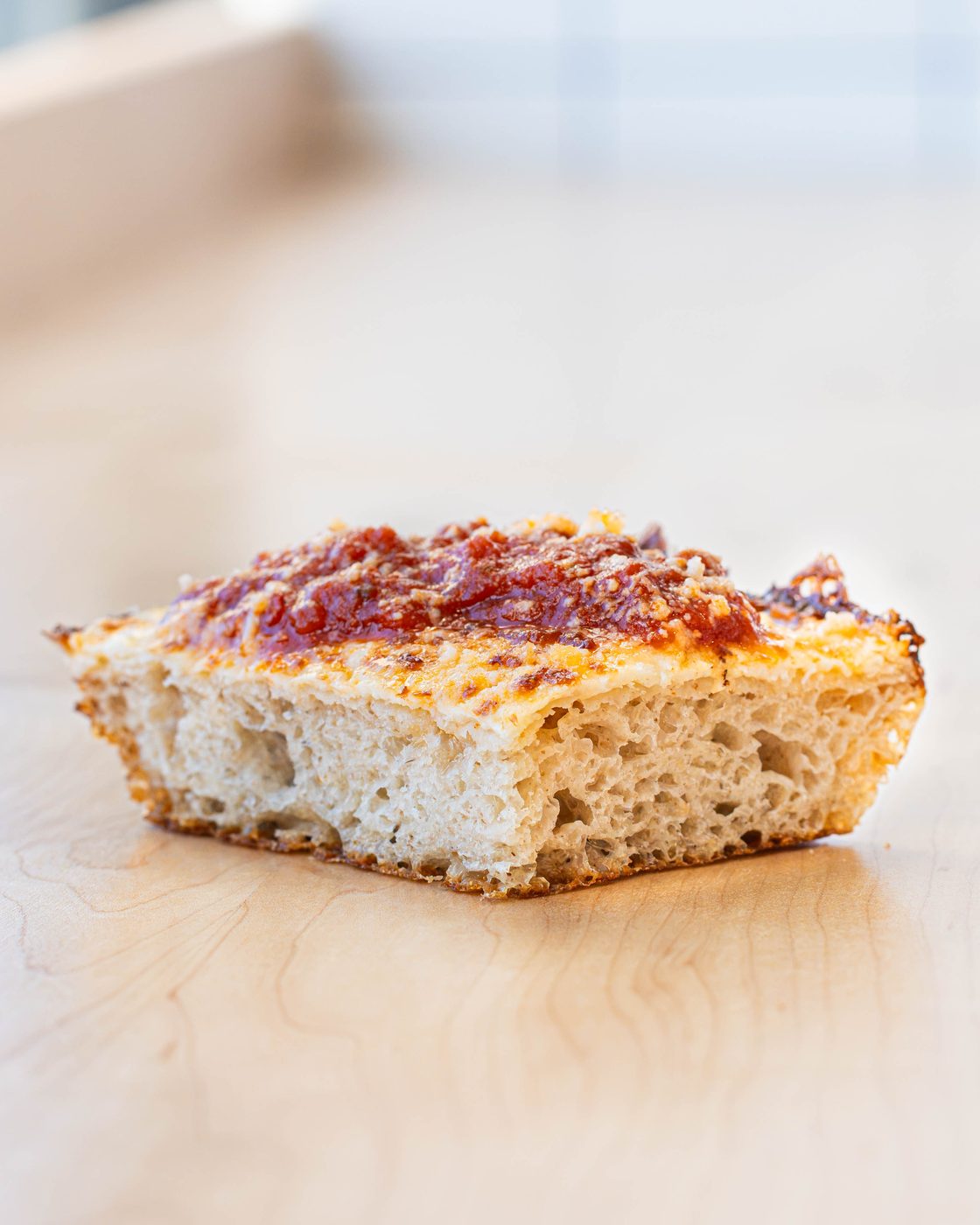
We also use a high-hydration dough, meaning it contains a relatively large amount of water. That extra moisture helps create the light, airy interior we’re looking for, while the outside and bottom develop a crisp, golden crust in the oven. Getting that balance just right has taken a lot of trial and error, and it’s something we continue to pay close attention to.
At the end of the day, all of these choices come down to the same thing: making a pizza crust that tastes great, has the right texture, and is worth the extra time and effort we put into it.
The cheese
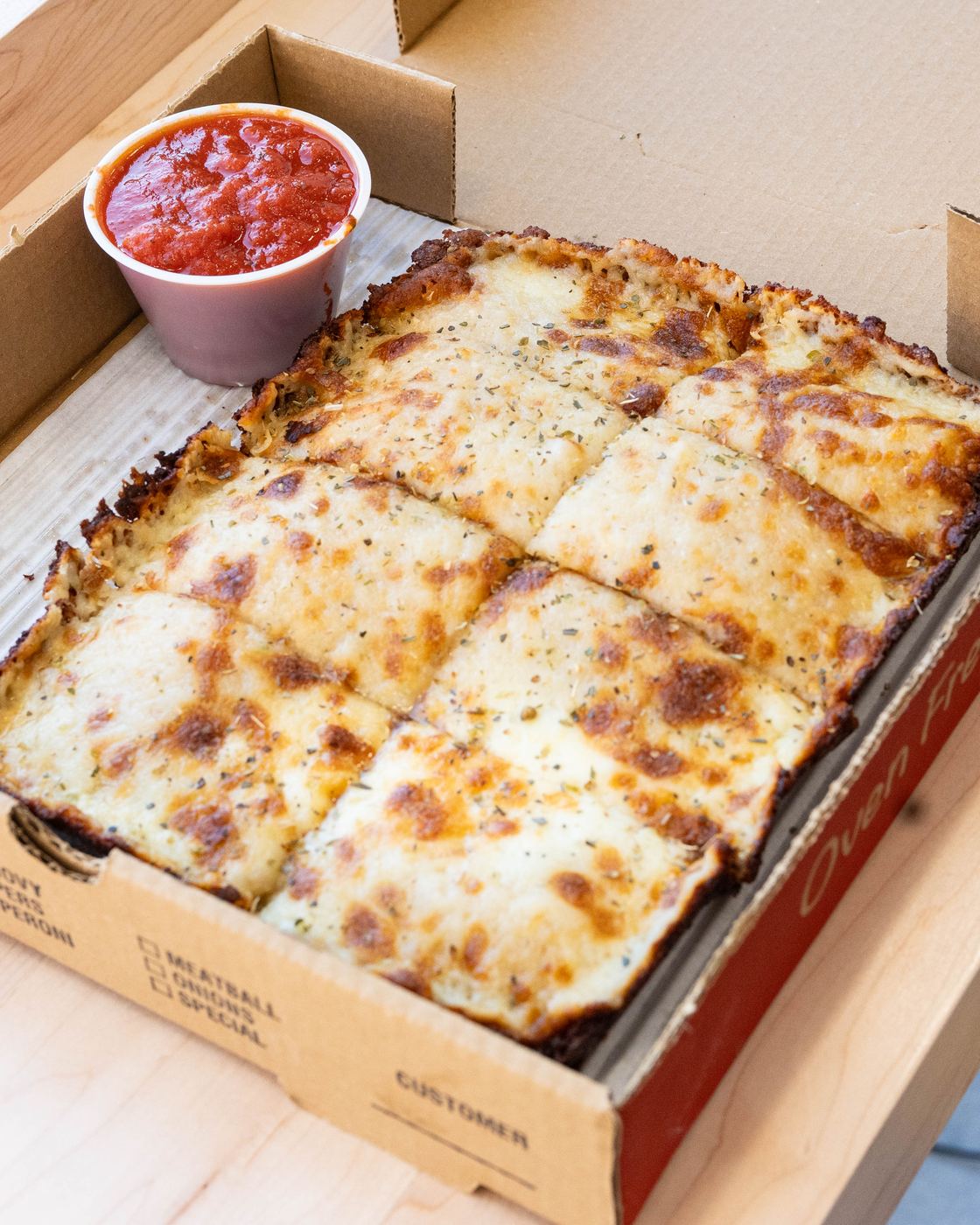
For the cheese, we use Wisconsin brick cheese, which is a big part of what makes this style of pizza different. It has more butterfat than a lot of the cheeses you’d normally see on pizza, and when it gets hot against the edge of the pan, it melts, browns, and gets crispy.
That crispy cheese around the outside is called frico, and honestly, it’s one of our favorite parts of the whole pizza. We put the cheese all the way to the edge of the pan on purpose because we want it to get a little dark and crunchy as it bakes. The corner pieces get the most of it, which is why people tend to fight over those.
We shred it ourselves every morning, which means no anti-caking agents and one less thing between us and the cheese.
Everything else
We make a lot of what we use here and spend a lot of time choosing the ingredients we don’t make ourselves. We keep the menu focused because every extra ingredient is another thing that has to be sourced, prepped, stored, and kept at the level we want. A smaller menu gives us more control over all of that and helps us keep the quality where it should be.
We’ll keep messing with it, too. That part probably isn’t going away.